


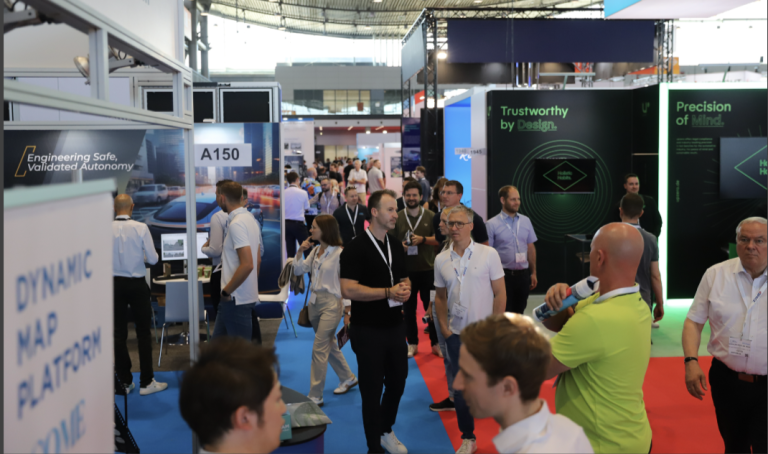
Autonomous Vehicle Tech Expo Europe (part of Vehicle Tech Week) took place in Stuttgart, Germany, last week, once again bringing together engineering departments, development teams and business units from across the intelligent vehicle sector. Visitors were able to experience the core technologies shaping the future of mobility, while sourcing new suppliers ready to help solve validation, scalability and deployment challenges.
“It’s my job as a chief strategist to figure out where are the opportunities, so coming to this [event], where I can talk with experts and see new technologies and how everything’s coming together, is a benefit that I can share with the whole team,” said Julia Grab, Ford’s chief strategist and planner for European passenger vehicles.
“I think there’s a lot of people who made the trip out here for this exact reason – to see what’s out there and to have those conversations for which there is a real need, so I see a real value in being here at this intersection of technology.”
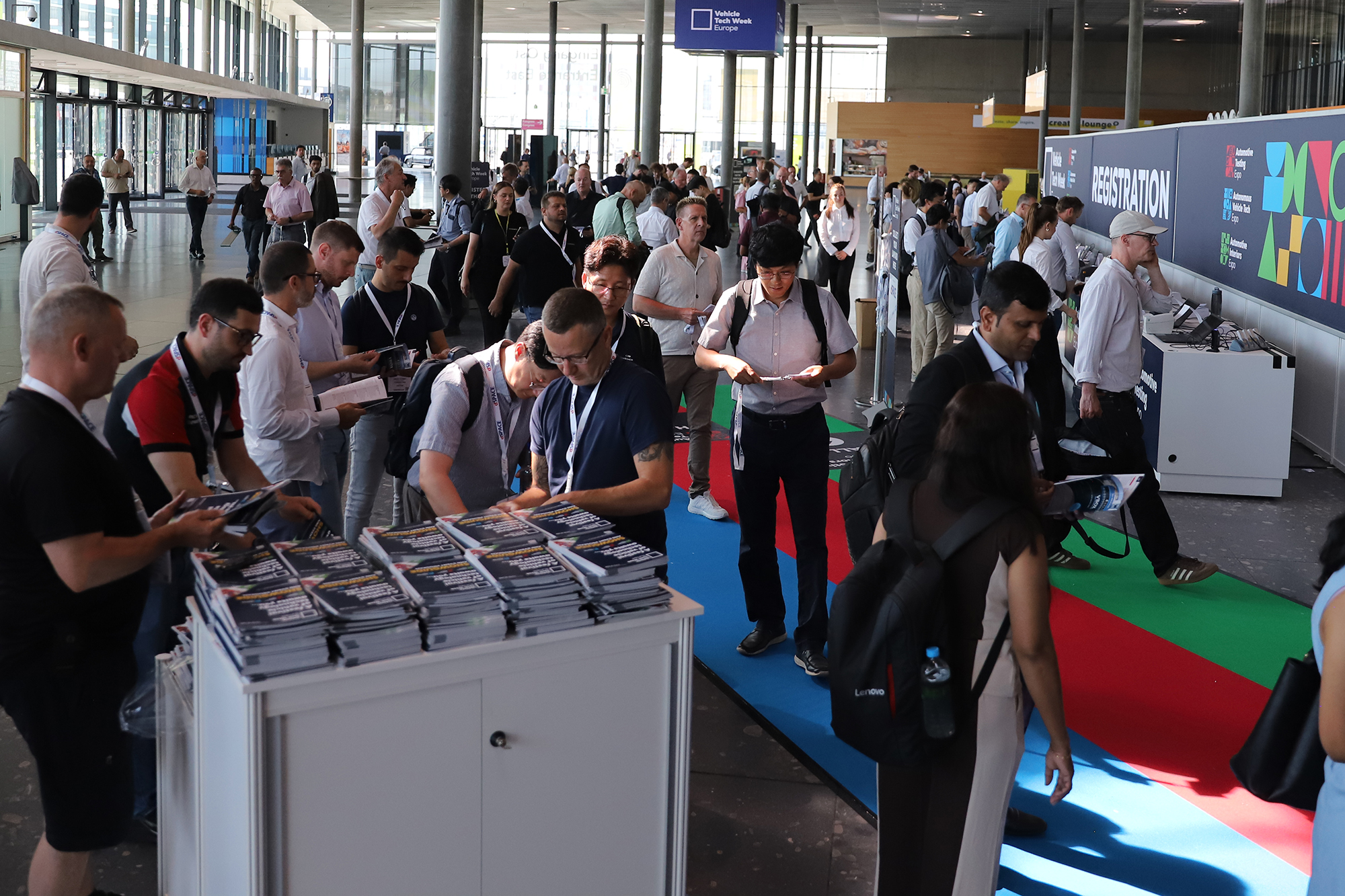 On the show floor
This year’s exhibition saw a wide range of innovation across the show floor (see our Day 1 and Day 2 roundups), from custom automotive cybersecurity solutions from Apriorit and the latest in ML-safe video data compression from Beamr, through to live demos from Foretellix, showing how it can integrate its Foretify physical AI toolchain with Nvidia’s Alpamayo open reasoning models, as well as the chip maker’s world foundation models (Omniverse, Cosmos, NuRec and others).
Simulation specialist rFpro presented the latest findings from the Sim4CamSens2 research project designed to advance the development and validation of automotive sensor systems through simulation; and visitors to aiMotive’s booth were able to experience the company’s interactive neural simulation toolchain for HIL testing.
Xavveo was in Stuttgart to present its distributed photonic radar technology, which boasts high-resolution, ultra-dense point cloud data in all conditions, enabling robust, reliable perception; and Teledyne FLIR presented Tura – the first Automotive Safety Integrity Level B (ASIL-B) thermal longwave infrared (LWIR) camera developed in compliance with ISO 26262 functional safety (FuSa) standards.
Ottometric was on hand to help OEMs turn real-world driving data into structured, prioritized and traceable scenarios that support faster validation and clearer decisions, through its Scenario Prioritization Ranking (SPR) technology.
 “This is our third or fourth year in a row [at this event],” confirmed Raj Seelam, VP, marketing and product, Ottometric. “It’s important for us because of its focus on testing, as we provide a validation platform, so we tend to get a lot of customers who are right in our space. The conversations are very valuable, not just from a customer adoption perspective, but also product penetration, developing our roadmap and just learning about our peers in the industry. There’s so much change in this industry on a month-by-month basis, and this provides a platform for us to learn about them.”
Visitors were also able to access relevant ADAS and automated driving tech at the adjacent Automotive Testing Expo, which included exhibitors such as Dewesoft, Xylon, Keysight, OXTS and more.
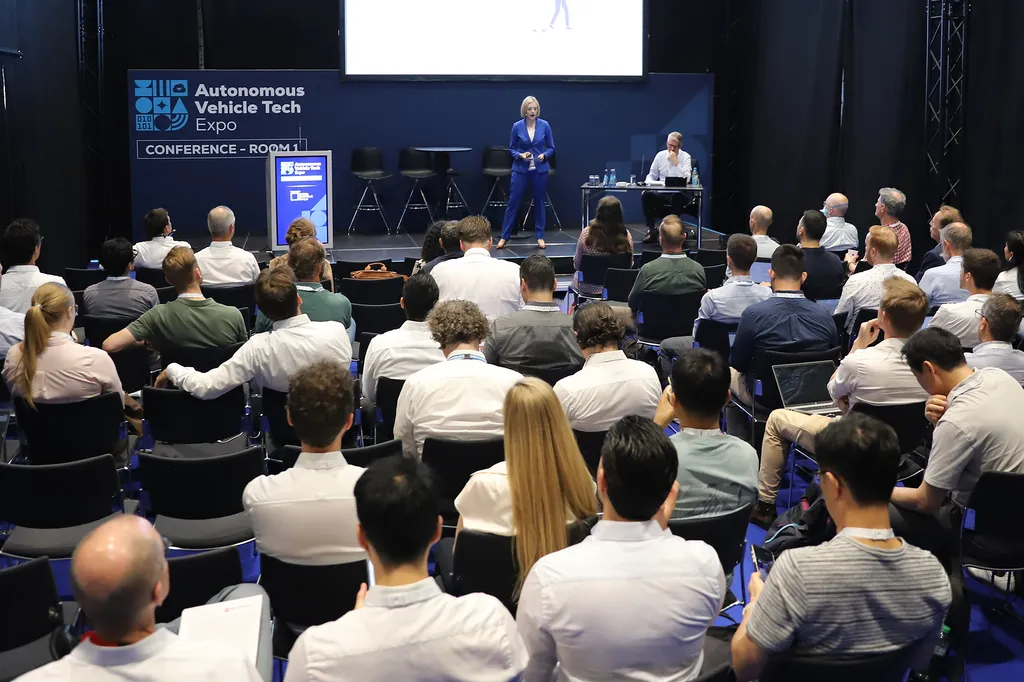 Conference insights
Alongside the exhibition, a three-day, two-track (paid for) conference featured four major themes: Software, AI & SDV architecture; safe autonomous deployment; simulation and testing, scenarios and virtual validation; and standards, regulation and system-level interoperability.
Ford opened proceedings with a presentation titled ‘Driver-centered architecture for future individual mobility’, in which it asked the audience to imagine a future where mobility finally bends to the driver’s needs, not the other way around. The OEM highlighted how, over the next decade, European drivers will redefine ‘good’ by demanding ADAS and autonomous features that feel second nature, software that improves daily, and safety that feels human.
Dr Huan Zhao Ternehäll, ADAS solution architect, Geely Technology Europe, discussed ‘ADAS in the SDV era: Opportunities, limits and safety challenges’ on the first morning of the conference. “I emphasized how true hardware-agnostic ADAS is difficult despite SDV architectures aiming to decouple hardware and software,” Ternehäll told AAVI. “I also examined the practical challenges OEMs and Tier 1 suppliers face when deploying portable, updatable ADAS stacks across heterogeneous hardware platforms. Finally, I highlighted the technical advances still required to enable scalable, safe ADAS in the SDV era.”
Professor Phil Koopman, faculty emeritus at Carnegie Mellon University, discussed the subject of embodied AI (eAI), also called physical AI, which uses artificial intelligence based on machine learning to interact with the physical world. He provided an overview of his new book on this topic, with robotaxi safety as a concrete example. “I think this event is a great way to reach a broad audience in Europe,” Koopman told AAVI immediately after his presentation. “There’s lots of people here, it’s a busy place, lots of people asking good questions, so I’m happy to be here.”
An interesting argument around the critical need for reliable, appropriate driver readiness assessment was made on the second day of the conference by Dr Marta Glinka, a psychophysiologist working for Harman International: “I’m here to present how driver readiness and distraction evolves through different levels of automation,” Glinka told AAVI. “It was important for me to emphasize how much human factors remain a critical concept, no matter how high the level of automation. Overall it’s a fantastic event, where I can listen with curiosity to many presentations and enjoy many interesting conversations.”
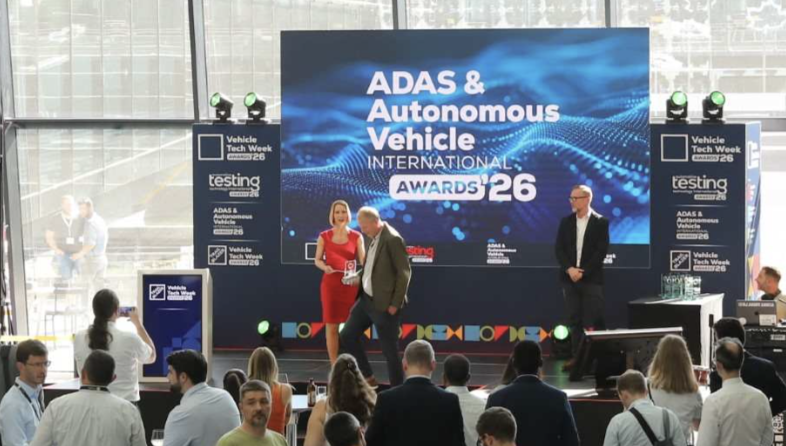 And the winners are …
The winners of the ADAS & Autonomous Vehicle International Awards were also announced live during a special ceremony at the end of Day 2, with Waymo, Euro NCAP, Waabi and Volvo Autonomous Solutions, Wayve and Parallel Domain all invited to the stage to pick up their trophies.
Don’t miss next year’s show, which will once again take place in Stuttgart: the all-important dates for your diary are June 2 & 3, 2027.