


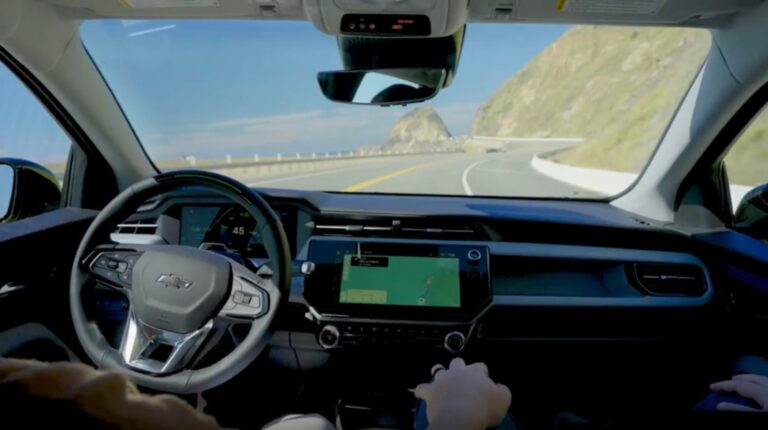
As of this week (April 27, 2026), customers of General Motors have collectively driven about one billion miles using the Super Cruise hands-free driver assistance system. This total distance is roughly equivalent to nearly 2,100 round trips between Earth and the Moon.
Nearly 750,000 Super Cruise-enabled vehicles across 23 models in North America have contributed to this achievement, generating large-scale, real-world learning that’s helping GM accelerate its autonomous roadmap.
“This one billion miles driven hands-free by our customers is just the start,” said Rashed Haq, VP of vehicle autonomy. “Super Cruise is the cornerstone of GM’s autonomous roadmap, from today’s hands-free features to eyes-off, starting with the Escalade IQ in 2028. That, combined with more than a century of manufacturing expertise, puts GM at the forefront to bring automated driving to millions of retail customers at all price points.”
Super Cruise is the starting point for a roadmap that expands the capabilities of the company’s advanced driver assistance systems. In 2028, General Motors aims to launch eyes-off driving on the Cadillac Escalade IQ.
In the last 12 months, GM customers used Super Cruise for 7.1 million hours across 28.7 million trips. In the past year alone, drivers logged nearly half a billion Super Cruise-engaged miles – well over a million miles per day. On average, when Super Cruise is engaged, customers spend roughly 24 minutes hands-free per trip. Over 50% of Super Cruise drivers use the technology weekly; nearly 85% engage Super Cruise at least once a month.
Over the past year, the Super Cruise-equipped vehicle population grew by about 70%, and daily Super Cruise users grew by roughly 80%. Super Cruise is a foundational technology for GM’s next generation of autonomous capabilities.
Across one billion miles driven hands-free, Super Cruise has experienced a broad spectrum of real-world conditions, including unique geography, varying weather conditions, disparate traffic patterns and road types and an expansive range of road-user behaviors.
This diverse real-world data creates a feedback loop to help Super Cruise continually adapt and improve. As Super Cruise use grows, the system learns from every scenario it encounters, which helps to continuously improve General Motors’ models and lays the groundwork for future autonomous features.
Last month, a next-generation automated driving system began supervised testing on public highways in California and Michigan. The system was developed using data from real-world driving and simulation. More than 200 test vehicles are expected to be deployed over time, each operated with a trained safety driver who can take control when needed. This phase represents a step in the company’s ongoing development and evaluation of automated driving technology for broader use.
Built on real-world scale
The continued growth in use including the number of customers, hands-free miles driven and data collected, contributes to the ongoing development of GM’s driver assistance and automated driving systems. Data from real-world driving helps refine existing features, supports the development and testing of future automated capabilities and contributes to the company’s broader software and services platform, including OnStar.
In related news, Zoox expands autonomous robotaxi testing to Miami