


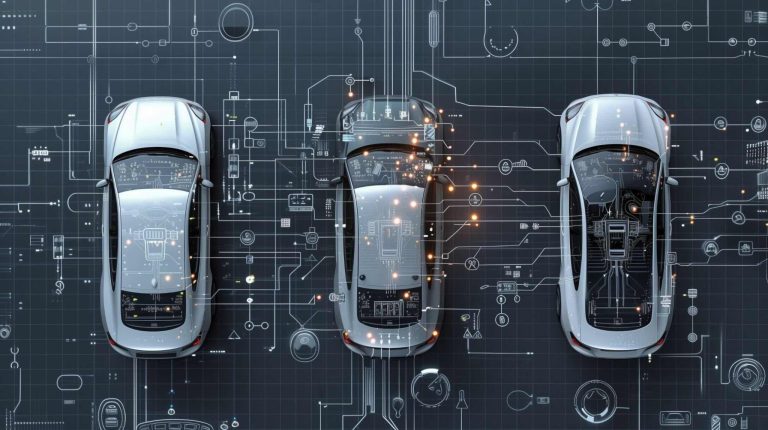
By publicly releasing internally developed technologies, Hyundai Mobis plans to enable more mobility software developers to create added value based on Hyundai Mobis’s software and ultimately establish it as an industry standard.
To this end, the company has joined the Software Defined Vehicle (SDV) Working Group under the Eclipse Foundation and will participate in the S-Core project to develop an SDV software platform in earnest.
The S-Core project is a global initiative launched primarily by European companies in late 2024 to standardize foundational technologies such as software platforms and middleware. It is the first open-source-based software platform development project to meet ASIL-B, the automotive industry’s functional safety standard.
Currently, a total of 13 companies are participating in the project and prioritizing the implementation of core technologies required for SDVs, as standardized foundational technologies are essential for accelerating the development of applications such as autonomous driving. Under the common objective, participating companies are also working to prevent redundant investments while improving system stability.
The most distinctive feature of the S-Core project is that it applies an open-source development approach, previously used primarily in the IT industry, to the mobility sector. Participating companies disclose some of their software technologies, enabling developers around the world to freely use and improve them.
Another reason companies disclose coding technologies that constitute intellectual property is the potential to create both tangible and intangible added value. By encouraging more developers to use their software, companies can increase the likelihood of their technologies becoming global standards.
The technology Hyundai Mobis plans to disclose is a so-called ‘container solution’ that minimizes interference between software within the Linux operating system. The technology effectively creates partitions between a wide range of software in SDVs, packaging them individually so they can operate quickly without affecting one another.
The container solution is known to be more than 10 times faster than existing technologies in automotive controller environments. The company has also secured an always-on integrity assurance function to prevent software tampering caused by external intrusions and other risks.
Related news, Nvidia launches Alpamayo 2 Super for reasoning-based autonomous driving