


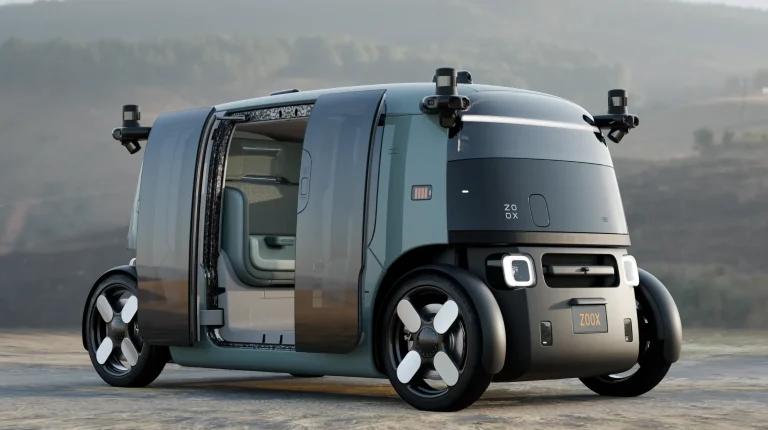
Zoox has launched the next iteration of its robotaxi as it prepares to move into large-scale production.
The company designed its robotaxi from scratch rather than adapting an existing vehicle for driverless use, meaning it could “design around riders, not drivers”, the company said. Feedback from half a million riders, alongside lessons from testing and early deployments, has informed ongoing refinements to the vehicle and shaped the development of this next generation.
Inside: comfort and calm
The carriage-style cabin remains the same, but has been updated with changes to comfort, usability and interior finish. The cabin’s color, material and finish (CMF) has been refreshed with a lighter palette, featuring monochrome aloe green seating and stone-grey flooring and trim. Zoox says the tonal color scheme has been designed to reduce visual distractions and create a calmer environment for riders.
Practical updates include revised CMF on the charging pad, cupholders and flooring, intended to make everyday items easier to spot and improve durability in everyday urban use.
“The updates we’ve made to this iteration of our purpose-built robotaxi continue to further distinguish the Zoox experience from anything else available today,” said Chris Stoffel, director, robot industrial design and studio engineering, Zoox. “The simplicity of the elevated interior design does not demand a rider’s attention like so many of the features found in today’s passenger cars. Instead, riders can relax and enjoy the space as they are transported throughout the city.”
The company has also made adjustments to the seating, adding padding and ergonomic curves to both the seats and headrests. Rider-favorite features have also been refined, including a more vivid touchscreen, fluting on the charging pad for stability and larger cupholders to keep riders’ beverages secure as they ride.
The outside
The exterior of the latest Zoox robotaxi closely resembles its predecessor, but incorporates a series of detail refinements aimed at making the vehicle easier to interact with.
The bidirectional reflectors, which use color shift to distinguish the vehicle’s front from its rear, have been repositioned and refined for better visibility and integration into the exterior. The door interface has also been updated with a new speaker and microphone, adding two-way audio capabilities to support clearer communication between the vehicle, riders, other road users and Zoox’s support team and first responders.
Built for scale
The latest Zoox robotaxi represents the company’s production-intent vehicle, with large-scale manufacturing set to begin at its serial production facility in Hayward, California. Zoox says vehicles will be added to its fleet and made available to riders later this year as they come off the production line, with production capacity of up to 100 vehicles per week to support planned expansion – subject to regulatory approval.
Related news, WeRide and Geely Farizon launch right-hand-drive robotaxi in Hong Kong