



 Although manufacturers undertake extensive technical evaluations, there is a lack of objective assessments from customers to ensure that their needs and expectations are incorporated into ADAS development. This information gap led e-mobility market research firm Uscale to conduct a large-scale study of user perspectives on ADAS.
At this year’s Autonomous Vehicle Tech Expo Conference in Stuttgart, Uscale managing director Axel Sprenger will highlight key findings from the study, including usage patterns, satisfaction and trust, differences between vehicle segments and brands, and recommendations for developers.
AAVI asked Sprenger to give us a taste of what to expect during his presentation on June 25.
What motivated Uscale to conduct the ADAS Satisfaction Study?
For me, ADAS is a kind of precursor to autonomous driving. Roughly speaking, autonomous driving is the sum of all ADAS features. I have the impression that the public debate around ADAS and autonomous driving focuses mainly on regulation, while in the expert community it essentially revolves around sensors, AI and technology. The user perspective has hardly been examined at all. There are a few academic studies on societal acceptance, but virtually no research on actual usage, usage barriers, satisfaction and the (necessary) potential for improvement. This is the gap we want to close.
How has your experience in Mercedes-Benz R&D and quality shaped your perspective on ADAS user behavior?
At MB R&D, I gained deep insights into how engineers work and develop systems. In the process, I learned that engineers often find it difficult to incorporate what initially appears to be unstructured user feedback into their work. I believe that almost everyone who develops products for customers should receive user feedback. In my experience, the user perspective is often completely different from that of the engineers.
 What did you learn about how drivers actually use and perceive ADAS features?
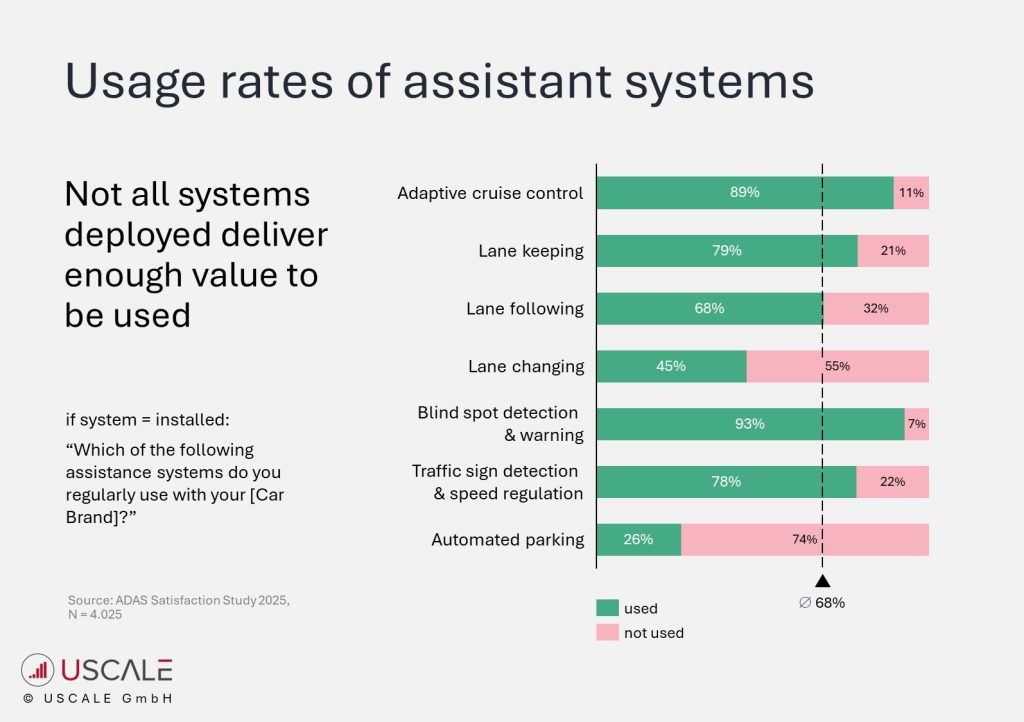
What surprised me most in the study results was how often customers do not use ADAS systems at all. I will present the reasons for this in my talk.
Who were the participants?
All 4,000 participants were drivers of vehicles no more than three years old, to ensure they could draw on very up‑to‑date experience with the latest systems. Half of them were recruited via social media, and the other half via a representative online panel. The strength of the social‑media group is that they tend to be a bit more critical, look very closely, and can articulate in precise detail where things go wrong. The representatively recruited participants, by contrast, are more reflective of the ‘average driver.’ Together, this creates a well-rounded and highly valuable picture.
What do your findings mean for OEMs developing ADAS and future autonomous systems?
OEMs and specialized suppliers significantly overestimate users’ willingness to adopt autonomous driving. That’s unfortunate, because I am convinced that autonomous driving has enormous potential. Those who truly understand users’ pains and barriers can improve the systems considerably with relatively little effort and, in doing so, achieve much higher take-up rates and thus more revenue.
 How are you sharing these insights with manufacturers?
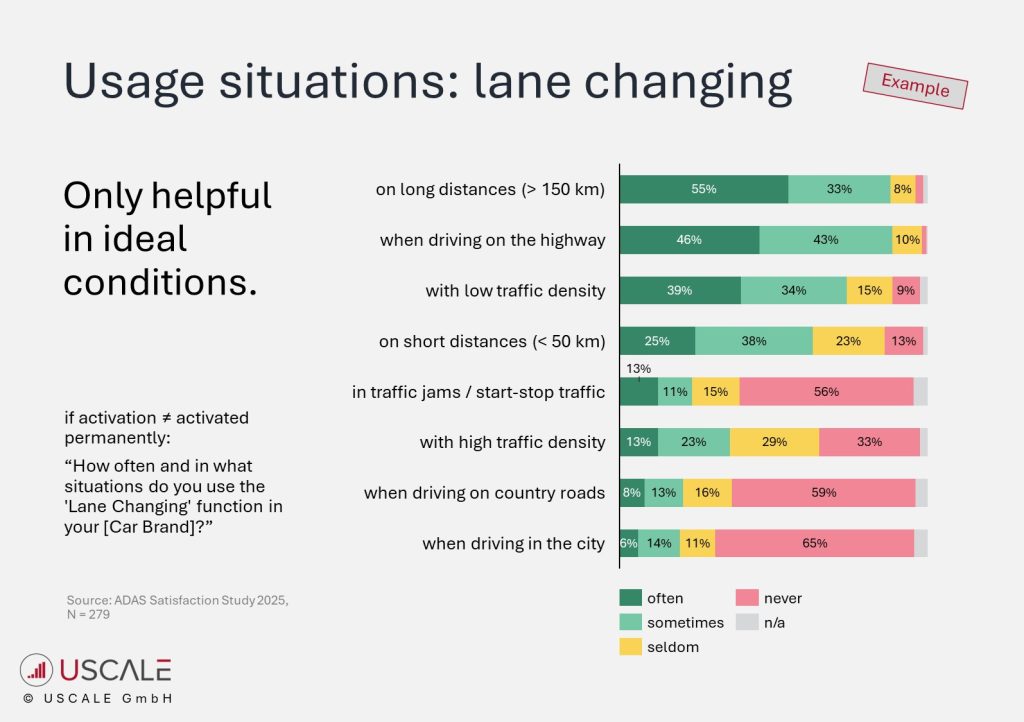
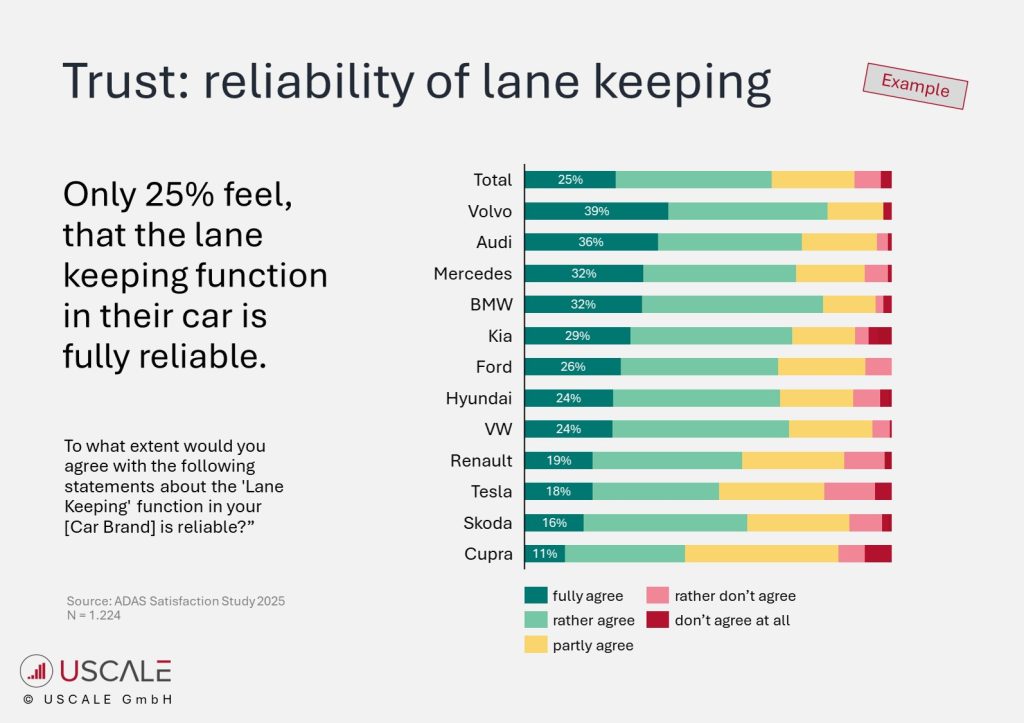
My presentation offers a first glimpse of the key results. The detailed findings at ADAS system and brand level are available to our subscribers within a licensing model.
Why did you choose to present this research at Autonomous Vehicle Tech Expo Europe?
I am firmly convinced that developers are (contrary to their own expectations) very capable of working with user feedback. The key is that this feedback must be prepared in the right way. Our study does exactly that, and I am looking forward to facing the critical questions from experts so we can improve the study in the next wave. We are currently preparing this follow‑up.
 Is there anything you’re hoping to explore or learn at the show this year?
I am deeply rooted in the e‑mobility industry. I am therefore very curious about the discussions at the conference, but also about the conversations at the booths. I am keen to understand where the industry stands and which questions it is currently struggling with.
Attend Axel Sprenger’s presentation in Stuttgart to find out:
- Why so many drivers underuse or switch off these systems;
- Where he sees the biggest differences across brands or segments;
- The biggest pain points reported by users – and what needs to be improved;
- What’s missing from today’s systems to build toward a ‘self-driving‑ready’ experience.
Click here to see the full conference program
Autonomous Vehicle Tech Expo will take place at the Stuttgart Messe in Germany, June 23-25, 2026. Click here to register for your FREE expo pass and click here to purchase a conference pass