


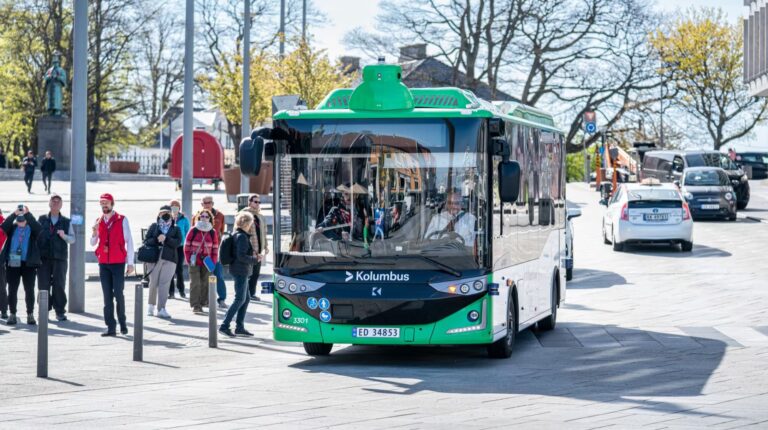
The public transportation sector across Europe is currently facing a critical challenge, with an estimated shortage of over 105,000 bus drivers. Autonomous vehicles present a solution to the deficit that threatens service reliability and prevents the expansion of transit networks.
For the first time in Norway, the Norwegian Public Roads Administration has granted permission for an autonomous bus to run on on regular public routes without a safety driver behind the wheel. Transportation operators Vy and Kolumbus will operate the bus, a Karsan autonomous e-ATAK.
While the vehicle’s autonomous driving software is delivered by AdasTec, Applied Autonomy’s xFlow system acts as the digital control tower. The platform enables operators to monitor, manage and provide remote passenger assistance from a centralized hub, fundamentally transforming how public transportation is delivered.
“By implementing xFlow, we are removing the primary bottleneck for scaling public transport,” said Olav Madland, CEO of Applied Autonomy. “Our technology allows a single remote operator to support and oversee multiple vehicles simultaneously. This provides a unique opportunity to maintain and even expand route services in areas where recruiting traditional drivers is no longer feasible.”
Beyond addressing the labor crisis, the transition to remote-assisted autonomous operations introduces a more sustainable economic model for municipalities and transportation operators.
“With xFlow, there is a clear path to significant cost savings,” Madland said. “By optimizing operations and shifting roles from manual driving to advanced fleet management and remote passenger care, we can deliver more public transit for every dollar spent. This is the key to making autonomous buses a commercially viable solution rather than just a pilot project.”
Related news, UK backs Fusion Processing to explore driverless airport transportation