


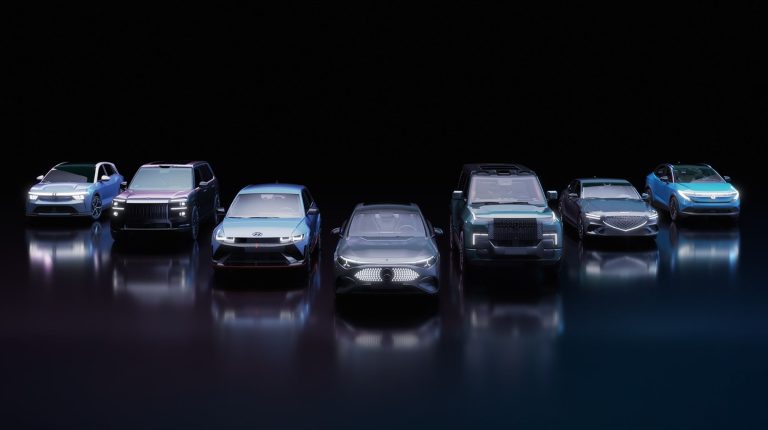
Nvidia has expanded the Nvidia Drive Hyperion robotaxi-ready platform ecosystem, bringing together leading global auto makers, manufacturing and autonomous vehicle software ecosystem partners and ride-hailing mobility providers to build and expand Level 4-ready robotaxi fleets.
Nvidia Drive Hyperion is a safe, scalable, Level 4-ready platform built on the Nvidia Halos full-stack safety system for physical AI. It combines high-performance Nvidia Drive AGX in-vehicle compute, Nvidia Halos OS – the software foundation of Halos, built on the safety-certified Nvidia DriveOS operating system – with a compatible multimodal sensor suite and Nvidia Drive AV software purpose-built for highly automated and autonomous driving capabilities.
“Autonomous mobility is entering its industrial scaling moment,” said Jensen Huang, founder and CEO of Nvidia. “Vehicles are becoming robots, and robotaxi fleets will require AI infrastructure that can perceive, reason and operate safely in the real world.
“Nvidia Drive Hyperion gives the world’s auto makers, AV developers and mobility networks a common Level 4-ready foundation — uniting compute, sensors, safety software and a global ecosystem to bring robotaxis from pilots to everyday transportation at scale.”
The foundation for Level 4-ready vehicles: Partnerships
Foxconn is expanding its strategic collaboration with Nvidia to accelerate the development and planned deployment of Level 4-ready robotaxi fleets built on Nvidia. The effort combines Foxconn’s contract design and manufacturing services with the Drive Hyperion platform to support the rapid integration, scaling and deployment of Level 4 electric vehicles — starting in Taiwan, with Kaohsiung expected to serve as an early deployment city, and then expanding across Asia. Foxconn plans to launch a robotaxi service in 2028, starting with airport-to-city routes and later expanding along corridors linked to Taiwan’s high-speed rail network.
“Autonomous mobility is a strategic focus of Foxconn’s EV initiative,” said Foxconn chairman Young Liu. “By leveraging strategic partnerships and Nvidia’s capabilities, we are accelerating the deployment of Level 4 robotaxi technology, with Foxconn providing high-performance computing and sensor integration to enable a worldwide rollout across communities and cities.”
VinFast is working with Autobrains to bring Level 4 vehicles built on Nvidia Drive Hyperion to Southeast Asia, combining VinFast’s vehicle development and manufacturing capabilities with Autobrains’ autonomous driving software stack.
“Advanced mobility shouldn’t be a luxury,” said Duong Nguyen, deputy CEO of ADAS at VinFast Global. “VinFast is committed to building scalable and accessible autonomous driving solutions through collaboration with global technology leaders. Together with Autobrains and Nvidia, we are exploring a practical and cost-efficient path toward Level 4 mobility for Southeast Asia’s highly dynamic real-world traffic environments.”
In Europe, Uber is also working with Autobrains to launch a robotaxi program in Munich built on Nvidia Drive Hyperion, integrating Autobrains’ agentic AI autonomous driving software to support scalable, Level 4-ready robotaxi operations.
“For auto makers and autonomy developers, the challenge is not just building autonomous vehicles – it’s bringing them into a commercial network where they can reliably serve riders at scale,” said Sarfraz Maredia, global head of autonomous mobility and delivery at Uber. “This program creates a new path to do that by combining vehicle-agnostic autonomy, leading AI compute and Uber’s ride-hailing platform.”
Igal Raichelgauz, founder and CEO of Autobrains, commented, “With Uber and Nvidia, we are bringing Autobrains’ agentic AI into autonomous ride-hailing – combining reasoning-based driving intelligence with the mobility platform and automotive compute needed to support scalable robotaxi operations across cities, vehicles and real-world conditions.”
Humain is working to bring Nvidia Drive Hyperion-powered robotaxis to the Middle East. The collaboration leverages Humain’s AI and mobility ecosystem to support the development and deployment of level 4-ready autonomous transportation solutions across the region.
“Autonomous mobility will become one of the defining AI platforms of the next decade,” said Tareq Amin, CEO of Humain.
Related news, Next-generation Helm.ai models deliver full-HD 360° synthetic driving environments