


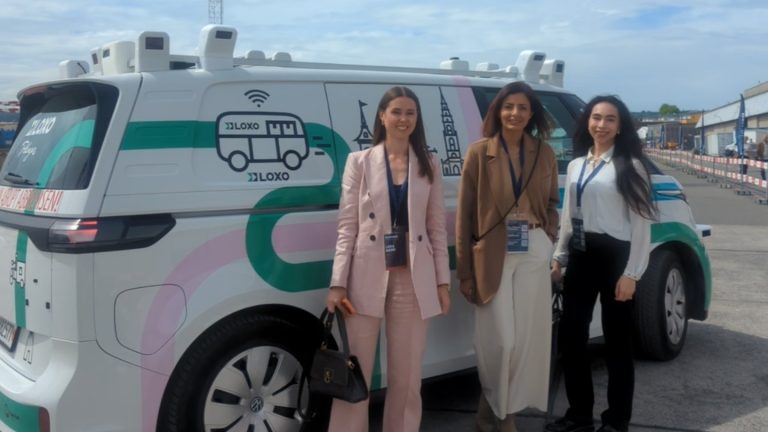
Europe is close to scaling the deployment of autonomous vehicles as it moves from pilots to commercial operations, with a projected roll out of hundreds, if not thousands, of AVs within five years. This progress was evident at the inaugural Automated Mobility Summit, which was held on May 4-5, 2026, at Innovation Park Zurich, and hosted by SAAM and PAVE Europe.
With 300 attendees, 30+ speakers and live demonstrations, the summit predicts a promising autonomous future. Many technical and regulatory barriers have been addressed, legislation is advancing and institutions increasingly recognize the benefits of automated mobility – from improved safety and accessibility to reduced emissions and addressing driver shortages in logistics and freight.
However, the value chain is complex – spanning OEMs, technology providers, operators, infrastructure, insurers, financiers, public authorities, and end users – which makes collaboration and knowledge sharing essential for safe, scalable deployment.
Presentations at the summit focused on overcoming deployment bottlenecks, aligning business models, building public trust and ensuring autonomous mobility delivers societal and commercial value.
 From pilots to real markets
Day one focused on Europe. Dr Matthias Schubert, EVP for mobility at TÜV Rheinland and chairman at PAVE Europe, discussed the commercialization of pilots, highlighting that challenges remain around liability, safety validation and scaling.
Global perspectives: Adoptions, trends, challenges and regulations
Waymo, Baidu, Bolt, Einride and Deloitte highlighted barriers and opportunities:
- Nathalie Teer, public policy manager, Germany, Waymo, emphasized accessibility. “Public transit doesn’t cater to needs. Booking a Waymo in the US lets blind communities, the elderly and those with autism own the mobility system—but regulatory frameworks vary widely across the US and in Europe,” she said.
- Yong Gessner, head of Europe, Intelligent Driving Group, Baidu, noted rapid scaling: “We’re partnering with Uber in London and Switzerland. We’re planning the first large‑scale commercialized fleet.”
- Charlotte Eisner, head of commercialization and corporate partnerships, autonomous driving, Bolt, stressed the role of small‑form mobility: “People are dying from loneliness – cities must embrace the small form factor.”
- Deloitte’s automotive lead for risk advisory in Continental Europe and Germany, Andreas Herzig, highlighted the importance of type approval.
- Nourie Boraie, SVP of global affairs and safety at Einride, pointed to driver shortages: “Young people are not becoming truck drivers.”
- Lukas Neckermann, board member at PAVE Europe and co-founder of the Urban Places Lab, noted freight is ahead of the passenger business model and can solve trust and safety.
In an on-site interview at the summit with Autonomous Vehicle Tech Expo’s Charlotte Iggulden, Neckermann expanded on value chain complexities and why public acceptance is the defining challenge.
From safety to public trust
Public acceptance remains a critical barrier. Vibeke Harlem, head of radical innovations at Ruter, said, “The public expects AVs to be safer. To introduce a service, they must experience the vehicle.” Vivetha Natterjee, head of product and deployment, autonomous driving, Bolt, added, “People overtrust a reputable brand. We should educate them that something can go wrong. Perceived safety also differs across cities and demographics.”
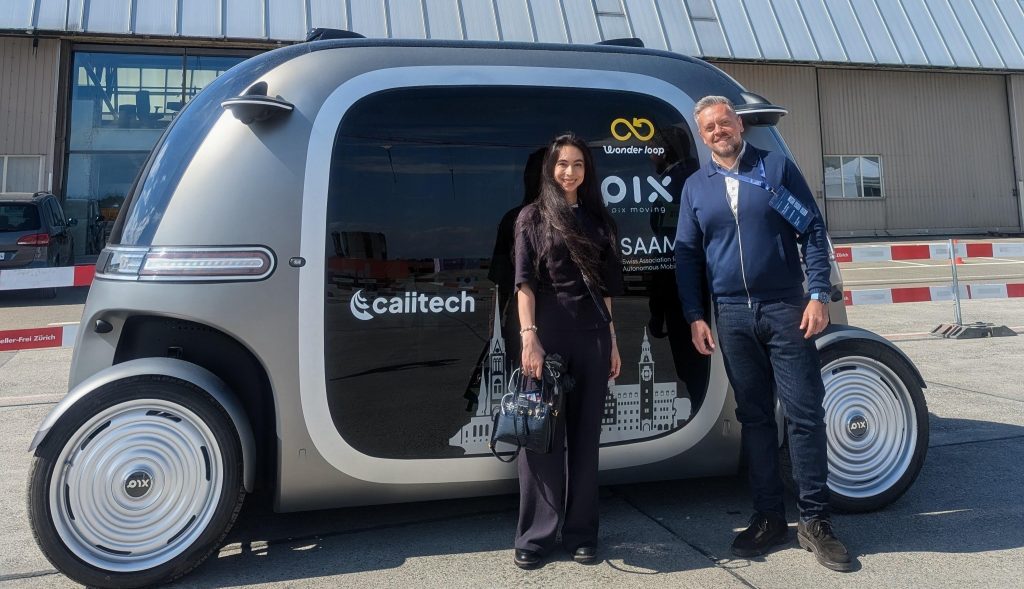 Human factors and co-creation were also emphasised. Clare Mutzenich, professor of practice in human-AI interaction at Loughborough University and founder of Anthrometic, stressed that importance of designing systems that reflect diverse user needs: “Trust in automated mobility starts with listening. By co-creating services with diverse users and bringing lived experience into the design process from the start, we can ensure automated transport is not only technically capable, but safe, usable and trusted.”
From technology to economics
Leaders from De Lijn, Holon, Uber, MobilEye, Loxo, EasyMile and the University of St Gallen said that as regulators recognize the benefits that autonomous mobility can bring, technology must be commercially viable for widespread adoption.
Autonomous Vehicle Tech Expo’s Charlotte Iggulden spoke on-site with Christian Lichtmannecker, head of business development – autonomous mobility, Mobileye, and PAVE Europe co-founder and board member, about the economics of Mobility‑as‑a‑Service and why the automotive industry should pay attention to new entrants.
Closing Day 1, PAVE Europe managing director Guido Pasquale said scaling requires collaboration between OEMs, operators, regulators and suppliers, and that public trust and user co-creation remain pivotal.
Switzerland as a launchpad
Day 2 shone a spotlight on Switzerland’s strengths in innovation and real-world trials, where coordination between public authorities, research institutions and industry has positioned it as a launchpad for deployment.
Jürg Röthlisberger, director of the Swiss Federal Roads Office, said regulation, safety and efficiency must align, and OEMs should pursue type approval and homologation. Emmanuelle Vandamme, president of the Belgian SPF for Mobility and Transport, noted the challenge of bringing technology into administration: “It’s not easy moving from regulation to real‑life experimentation, but we will invest in skills, test locally and scale.”
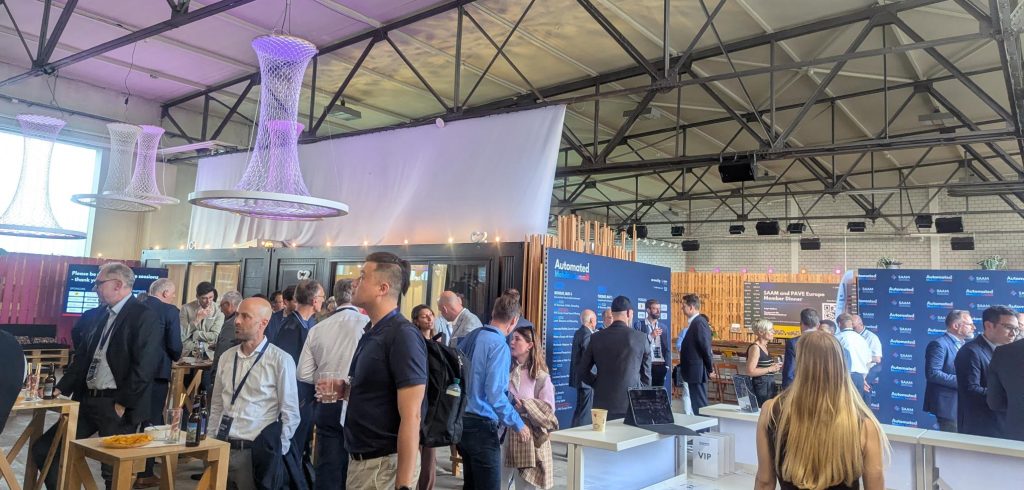 Real-world deployment
SAAM’s director of operations, Oliver Nahon, introduced eight driverless projects and said, “Switzerland is trialling use cases with a remote supervisor; 100 AVs are planned until 2028.”
These projects include:
- Artour – Switzerland’s first autonomous public bus, in Zurich Old Town (with FEDRO)
- Ultimo – EU‑funded, large‑scale, on‑demand service (L4 planned for Q4).
- Amigo – robotaxi operation using Baidu Apollo RT6 (2027).
- IAMO – robotaxi deployment in the Furttal region led by WeRide with project partners including the Swiss Transit Lab, SBB CFF FFS, Kanton Zürich and Kanton Aargau.
- Zurich Airport – WeRide partnership that will see the first AV testing in a safety‑critical airport environment.
SAAM managing director Rémy Chrétien presented the SAAM Roadmap – a dynamic framework outlining how Switzerland can use AVs to achieve safer, more efficient and more sustainable transportation that he framed as a call for collaboration between policymakers, business, academia and society.
Sigrid Pirkelbauer at FEDRO noted differing regulations make unity difficult: “Real‑world experiences require transparency. Loxo is moving the safety driver to another seat. L3-4 is a deployment business case.”
 Scaling challenges and next steps
Despite momentum, barriers remain. Loxo CEO Amin Amini said, “Business cases must focus on use cases where type approval triggers the next commercial phase,” and PAVE Europe and Ruter’s Harlem emphasized aligning business models and investing in infrastructure. Swiss national council member Barbara Schaffner stressed the importance of persuading people to choose automated mobility and Belgian Mobility and Transport SPF president Vandamme highlighted the role of collaboration and strong regulation.
Summit attendees were also able to experience some of the autonomous vehicles that are currently in deployment, with WeRide showcasing its Robotaxi and Robobus. “We want to promote WeRide’s autonomous vehicles and technology to potential clients and transport authorities,” said Simon Zhao, WeRide’s European project director. “We also want to learn about policy, regulation and industry trends.”
PAVE Europe is an association partner of Vehicle Tech Week Europe, Europe’s landmark event for vehicle technology that will take place at the Messe Stuttgart, Germany, on June 23-25 and bring together Automotive Interiors Expo, Automotive Testing Expo and Autonomous Vehicle Tech Expo.
Join the PAVE Europe panel discussion AVs & public acceptance – how can engineers help ready the public for widespread deployment?, which will take place on Day 3 of Autonomous Vehicle Tech Expo Europe at 12:10pm in Room 1 as part of Safe autonomous deployment session 3.