


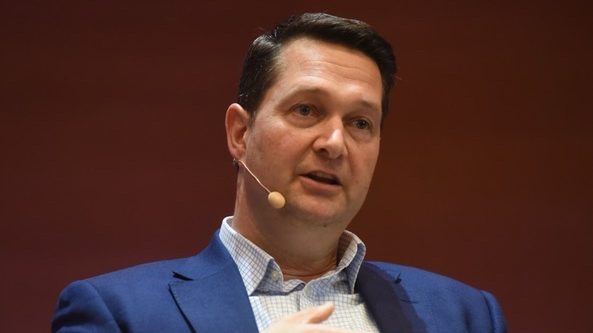
During the inaugural Automated Mobility Summit, which took place at Innovation Park Zurich on May 4-5, 2026, Autonomous Vehicle Tech Expo’s Charlotte Iggulden sat down with Lukas Neckermann, board member and co-founder, PAVE Europe, and co-founder of the Urban Places Lab, to discuss the complexities of the autonomous vehicle value chain and why the industry is at an inflection point – while technical and regulatory barriers have been addressed and legislation implemented, public acceptance remains the defining challenge
What is your involvement with PAVE Europe?
I was a co-founder and now serve on the board. We brought together an initial consortium to educate on autonomous mobility in Europe, which has since grown significantly. PAVE US formed around the same time, and we quickly agreed to partner. We have regular exchanges – Europe and the USA are each leading in certain areas of this ecosystem, so we share a lot of knowledge – as well as, of course, members.
What led to the creation of the coalition?
By 2019, I had written four books on the mobility revolution, smart cities, smart mobility and fleets. My consultancy had done a study focused on the barriers to adoption – social, political, technical, legislative. We found that most were being addressed, but the social element – getting people to accept autonomous vehicles – was significantly open. Industry collaboration was needed to address this. I was also lecturing at the University of St Gallen’s Institute of Mobility at the time, so we reached out to our friends across the ecosystem to found this consortium.
Why did you participate in the Automated Mobility Summit?
PAVE Europe wants every opportunity to reach new audiences across the continent. SAAM (Swiss Association for Autonomous Mobility) is a member and board member, so it made sense to host a joint event in Switzerland for our member meeting.
What’s one real-world challenge the industry is struggling with, and how is it being solved?
We’re very early in the automated mobility journey. There are many challenges, but the opportunity is far greater. We’ve crossed most chasms: technical challenges are no longer a huge hurdle, regulatory challenges are being addressed, and legislation is getting implemented. There’s no significant political debate either, as there are manifold advantages – accessibility, safety and environmental. Yet today, we still only have a few thousand vehicles on the streets worldwide. We want greater speed of deployment and adoption, and the core task of convincing people to accept automated services remains. History shows this takes time. Lifts and aircraft automation were resisted despite being technically viable.
Does adoption depend on trust?
Yes. We must prove safety, reliability and that the system can operate in an integrated way. There have been many pilot projects, but still too few people have experienced autonomous mobility.
What’s the biggest misconception?
There are two. The first is a technical misconception – the term ‘self-driving’ has been used in a way inconsistent with a fully automated system. And, Levels 3, 4, or 5 were never intended for public consumption – they were an engineering distinction created by SAE. Insurers, for example, distinguish between whether a vehicle has a driver in control or not.
The second misconception is that the automated mobility value chain is somehow derivative of automotive. In automotive, you had Tier 1 and 2 suppliers, an OEM – essentially an integrator – that sold vehicles to a leasing company or dealer, then to you. This ecosystem is much broader and blends automotive, public transport, energy, tech, infrastructure, and other industries.
How complex is the value chain?
It spans on-demand platforms, manufacturers, operators, insurers, financiers, technology providers. Even the tech stack has multiple layers and builders – sensors, chips, etc. There are many touchpoints, and people who need to cooperate. Who will own and operate the vehicles – is it the financial services industry: banks, leasing companies, private equity? We engage with financial services, insurers, public transport authorities and others so they know what they’re financing, insuring or running.
How is PAVE Europe shaping the future of autonomous mobility and society at large?
Our role is to educate because our members believe that autonomous vehicles bring enormous social, economic and environmental advantages. We have an academic advisory board, public sector advisory board and a cities advisory board, with working groups on trust, acceptance, insurance, public transport and logistics. Our working groups, for example, recently met with the academic advisory council to explore university studies to inform the public.
Social value is a considerable component of what we do, and we’re at the forefront of engaging the end user.
What does informing the public look like?
We had a stand and test drives at a train station in Darmstadt, Germany, to collate feedback and address concerns. We’ve done dozens of podcasts and webinars, and will engage much more with the media.
Your panel discussion brought together Waymo, Baidu, Bolt, Einride and Deloitte. Why are global perspectives on adoptions, trends, challenges and regulations important?
Adoption speeds vary across the US, China and Europe, but starting points also differ. Each can learn from the other – how to deploy vehicles, and technical questions. Conversely, legislative environments vary – driven by infrastructure, use cases and safety. Road safety standards are much higher in Europe for human-driven vehicles, and consequently for automated vehicles. Europe also has a proclivity toward shared mobility, with people walking, biking and other modes, creating challenges for automated mobility, but if someone can make it work here, then they will in other areas.
What’s one trend that will define the next five years of the autonomous vehicle industry?
Public-private partnership. Europe has more pilot projects and public sector investment than any other region – the latter is keen to deploy, but now we need to scale.
What was the focus of your presentation at Automated Mobility Summit 2026, and what audience do you hope was in attendance?
A broad mix of industry, press, end users and user groups. We want to be transparent and informative, through this interview and other reporting. If we can clear misconceptions and provide a positive industry view, then we’ve done our job.
PAVE Europe is an association partner of Vehicle Tech Week Europe, Europe’s landmark event for vehicle technology that will take place at the Messe Stuttgart, Germany, on June 23-25 and bring together Automotive Interiors Expo, Automotive Testing Expo and Autonomous Vehicle Tech Expo.
Join the PAVE Europe panel discussion AVs & public acceptance – how can engineers help ready the public for widespread deployment?, which will take place on Day 3 of Autonomous Vehicle Tech Expo Europe at 12:10pm in Room 1 as part of Safe autonomous deployment session 3.